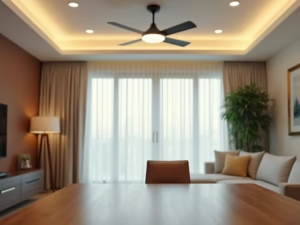
With the rising costs of energy bills, homeowners are continually seeking ways to cut expenses and enhance efficiency. One significant upgrade gaining traction is the adoption of LED lighting. This article delves into how LED lighting upgrades can affect your power bill and the overall long-term savings you can expect.
The Shift to LED Lighting
LED, or Light Emitting Diode, lighting has transformed the way we illuminate our homes. Unlike traditional incandescent or fluorescent bulbs, LEDs use semiconductors to convert electricity into light, making them significantly more energy-efficient.
This shift to LED technology is not merely a trend; it’s a movement towards sustainable energy use. For residents across the Central Coast, including Wamberal, the adoption of LED bulbs has led to substantial changes in energy consumption patterns.
How Do LED Lights Save Energy?
LED lights use up to 80% less energy than traditional incandescent light bulbs. For instance, while a standard bulb may consume 60 watts of power, an equivalent LED bulb only needs about 10 watts to produce the same amount of light. This remarkable efficiency directly translates into reduced energy bills.
Most LED lights have a lifespan of 15,000 to 50,000 hours compared to just 1,000 hours for incandescents. This longevity means fewer replacements, less waste, and ultimately more savings.
Calculating Your Potential Savings
Let’s break this down further. If you have ten 60-watt incandescent bulbs running for an average of five hours a day, your energy consumption would look like this:
- Incandescent: 10 bulbs x 60 watts x 5 hours/day = 3,000 watt-hours/day
- LED: 10 bulbs x 10 watts x 5 hours/day = 500 watt-hours/day
Assuming you pay a rate of $0.25 per kilowatt-hour, here’s how your costs would compare:
- Daily cost for incandescent: (3,000 watt-hours / 1,000) x $0.25 = $0.75
- Daily cost for LED: (500 watt-hours / 1,000) x $0.25 = $0.125
Therefore, by switching to LED lighting, you could save approximately $0.625 per day, which adds up to around $229.25 annually.
Factors Influencing Savings
Initial Investment
While the savings are clear, it’s essential to consider the initial investment. LEDs may have a higher upfront cost compared to traditional bulbs. However, with their energy savings and durability, the return on investment is usually seen within a year or two.
Number of Fixtures
The number of fixtures in your home will also influence savings. Larger households in areas such as Wamberal tend to have more light fixtures, which means switching to LED bulbs can lead to remarkable savings on monthly power bills over time.
Usage Patterns
Another factor to consider is how often and for how long your lights are on. In homes with extended lighting usage, the savings become more pronounced.
Environmental Benefits
Switching to LED lighting not only affects your wallet; it also has beneficial implications for the environment. The reduced energy consumption lowers your carbon footprint, contributing to a more sustainable future.
Reduced Heat Emission
LED bulbs generate less heat than traditional bulbs, which can also aid in reducing air conditioning costs during warmer months. This feature is particularly advantageous for residents living in warmer climates along the Central Coast of New South Wales.

Professional Installation: Why It Matters
Although switching to LED is a straightforward DIY project, hiring a licensed electrician from the Central Coast can ensure that everything is installed safely and correctly. A local electrician can also provide advice on the best LED solutions tailored to your home’s specific needs.
Ensuring Safety and Efficiency
Licensed electricians bring expertise, ensuring that your lighting is not only energy-efficient but also meets safety standards. This is particularly crucial in older homes where electrical systems may require upgrading.
Long-Term Benefits of LED Upgrades
Many homeowners see the immediate cost benefits, but the long-term advantages should also be considered. Investing in LED lighting can increase your property’s resale value, as future buyers often look for energy-efficient homes.
Additionally, many energy providers offer rebates and incentives for upgrading to energy-efficient systems like LEDs. Checking for local programs in areas like Wamberal can help homeowners maximize their savings even further.
Shining a Light on Local Electricians
When considering a lighting upgrade, finding the best electrician on the Central Coast, whether in Wamberal or surrounding areas, is vital. Local electricians can provide tailored advice and professional installation services that ensure you benefit from your investment.
Why Choose Local?
Choosing a local electrician not only supports the community but also ensures that you’re working with someone who understands local regulations, and energy practices, and can offer personalized service.
Conclusion
Upgrading to LED lighting is an effective strategy for homeowners looking to save on power bills while making a positive environmental impact. The potential savings are underscored by their long lifespan and energy efficiency, making them a worthwhile investment.
By collaborating with licensed local electricians on the Central Coast, you can ensure that your lighting solutions are optimal, safe, and tailored to your specific needs. In the long run, the transition to LED lights not only brightens your home but also your financial outlook, providing savings that add up over time.